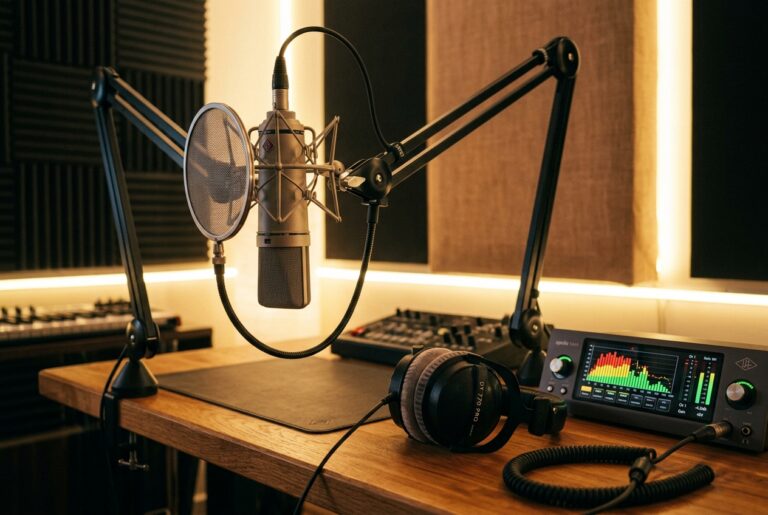

When a voice reply feels slow, “the model is slow” may be only one part of the explanation. A turn can include microphone capture, silence detection, upload, speech recognition, model generation, speech synthesis, network transit, buffering and playback. A WebSocket can keep a two-way channel open, but it does not make those stages disappear.
Map the path before optimizing it
Record event times for: user stops speaking; final audio chunk leaves the device; server receives it; transcript is ready; response generation begins; first text arrives; first audio packet arrives; playback starts. The gaps between adjacent events identify the stage worth inspecting. Use intervals from one clock or synchronize clocks first; otherwise client/server offset can masquerade as latency.
| Observed wait | Likely area | First check |
|---|---|---|
| Before upload | Capture and endpointing | Does the client wait through a long silence window? |
| Upload complete to transcript | Network or speech recognition | Separate transfer completion from transcript-ready. |
| Text ready to audio playback | Speech synthesis or buffering | Log first audio packet and playback start separately. |
| Long pauses between turns | Connection lifecycle or server queue | Log reconnects, queue time and close reasons. |
What WebSocket changes
RFC 6455 defines a handshake followed by framed data over a TCP connection; after the handshake, both endpoints can send data independently. The standard handshake uses HTTP status 101 to switch protocols and WebSocket protocol version 13. These are protocol identifiers, not measures of conversational speed. A persistent connection can avoid repeatedly opening a request for every interactive message, but it does not guarantee a faster model response. Radio conditions, server queues, inference time, audio chunk sizes, buffering and application backpressure still affect the user’s wait. The JavaScript WebSocket API does not provide built-in backpressure, so a client that receives faster than it processes may accumulate buffered data.
Use a persistent channel when the interaction needs frequent two-way messages and the service can manage reconnects and flow. Send events needed for the active turn only. Close or suspend a session when the user leaves; make reconnect state explicit so a dropped socket does not duplicate a request. A reconnect should have an idempotency key or turn identifier where the architecture supports it.
Build a small, repeatable measurement
Use at least 20 scripted turns as a starting sample, not as a claim that 20 is universally sufficient. For each turn, log two summary measures: median time to first audible output and the 95th-percentile time to first audible output, both in milliseconds. Keep the full stage-by-stage intervals as diagnostic data. Report the device, OS, network type, language, codec and whether audio was streamed or returned as one file. Repeat under Wi-Fi and cellular instead of mixing both into one average.
Do not record conversation text or raw audio just to obtain timing. Use opaque request IDs and event timestamps. If a failure happens, retain the error category and reconnect count, then remove any accidental payload from diagnostic storage. If you change endpointing, audio chunk size or model, change only one variable per comparison. Otherwise an apparent improvement cannot be attributed to a cause.
| Metric | Definition | Why keep it |
|---|---|---|
| First-audio latency (ms) | Playback start minus the user’s end-of-speech event. | Represents the wait the listener experiences. |
| Stage latency (ms) | End timestamp minus start timestamp for each stage. | Shows where time accumulates. |
| p95 first-audio latency (ms) | 95th percentile across the same scripted run. | Shows a slow-tail experience that a median can hide. |
| Reconnect count | Number of unplanned connection restarts in a run. | Separates transport instability from model delay. |
Cache only what should be reused
Stable interface configuration or public voice metadata may be cacheable if the provider permits it. Do not put private conversation text, access tokens or user audio in a shared cache. Reusing a connection or prompt prefix can reduce setup work in a particular architecture, but measure the actual path and document the cache boundary. A private user message should not become a cache key that another user can observe.
Interpret results without overstating them
The WebSocket specification describes a transport, not an end-to-end voice benchmark. A faster first packet does not prove a better conversation if the audio is choppy or the transcript is inaccurate. Pair timing with a human-readable quality check, and label any published result by device, network and date. The 20-turn plan above is a proposed protocol; it is not a measurement of an EmberGF partner or any named application. EmberGF has not benchmarked a named companion service for this article.
Affiliate disclosure: EmberGF may earn a commission from eligible referral links on this site. A referral does not change the technical limits described here.