A content filter answers one narrow question: whether a system allows or blocks a particular output. Consent is broader. It concerns who is participating, what they agreed to, whether a boundary persists, how personal data is used and what happens when something goes wrong.
An adult AI product can have a long blocked-word list and still offer weak user control. It can also block too broadly while failing to explain identity, memory or reporting. Safety cannot be measured by how often the interface says “no.”
Five layers of consent
- Audience and age: the service should state its intended audience and apply an age-appropriate access process. A birthday field alone does not answer every assurance question.
- Identity and likeness: users need clear rules around impersonation and the use of another person’s face, voice or private material.
- Conversational boundaries: a stated limit should influence later responses, not disappear after one turn or one session without explanation.
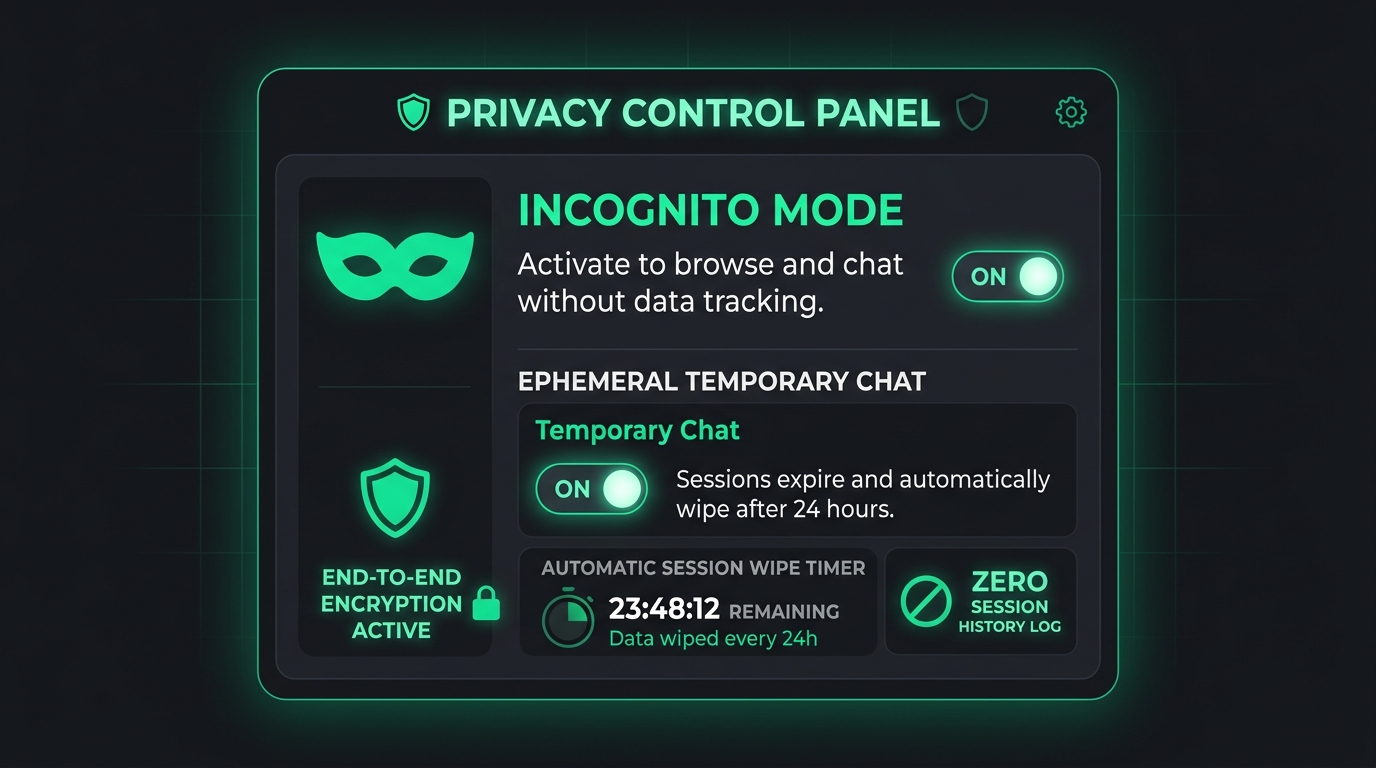
- Data permission: agreeing to role-play is not the same as agreeing to model development, human review, indefinite retention or public sharing.
- Recovery: blocking, reporting, deleting content, correcting memory and leaving the service must remain available after an uncomfortable interaction.
A checkbox is not a tiny lawyer. Its meaning depends on the text, timing, default and whether declining remains a realistic choice.
Interface design can change the answer
A controlled study of consent-management interfaces combined a large website scrape with experiments on interface choices. The 2020 CHI paper found that design decisions such as available choices and presentation could materially influence consent outcomes.
The study concerned web cookie-consent interfaces, not adult companion chats. Its relevance is the demonstrated mechanism: a nominal choice can be steered by layout. The same review question applies elsewhere—are “accept,” “decline” and “change later” equally understandable and reachable?
The FTC’s Bringing Dark Patterns to Light report describes interface practices that can steer or manipulate consumer decisions. It is agency guidance, not proof that a particular AI service uses those practices. It gives reviewers a vocabulary for examining obstructed exits, disguised choices, repeated pressure and buried information.
Test persistence, not only the first refusal
Use a fictional, non-identifying scenario and define a clear boundary. Then examine:
- Does the system acknowledge the boundary without arguing or applying emotional pressure?
- Does the boundary persist through topic changes and a later session?
- Can it be reviewed, edited or removed from saved memory?
- Does an unwanted output have a visible report path?
- Can the user block a character, reset the conversation or leave without losing access to account controls?
- Does the service distinguish generated role-play from notices about billing, safety or policy?
This checks visible behaviour only. It does not establish how data is processed behind the interface, and it should not be described as a complete safety audit.
Filters need governance around them
The voluntary NIST AI Risk Management Framework treats trustworthy AI as continuing work across governance, context mapping, measurement and risk management. The NIST Generative AI Profile adds suggested actions for generative-AI risks, including evaluation and incident disclosure. Neither document certifies an adult product, but both push analysis beyond a single moderation toggle.
The FTC’s companion-chatbot inquiry asks providers how they test negative impacts, enforce age restrictions, communicate limitations and use conversation data. It is an information-gathering inquiry, not a conclusion about wrongdoing.
A practical consent standard
Before using an adult AI service, confirm the intended audience, identity rules, memory controls, data choices, reporting path and exit. Keep real names, private images and another person’s information out of a first test. Use the privacy checklist for the data layer and the EmberGF review method for reproducible evidence.
A good safety system does more than block content. It lets an adult set a boundary, understand its scope, change their mind and leave without the product turning friction into persuasion.